



Blackjack is one of those games that looks simple until you actually sit down to play. At first glance, everything seems obvious: get closer to 21 than the dealer and don’t go over. But after a couple of rounds, you realize there’s more going on beneath the surface. The Blackjack rules are easy to pick up, yet the way the game unfolds keeps it interesting every time.
If you’ve ever watched a real table or joined a session of blackjack live, you’ve probably noticed how naturally experienced players move. They don’t overthink every card. Decisions come quickly, almost instinctively. For a beginner, though, that same speed can feel overwhelming.
The trick is not to rush. Once you understand the flow and get comfortable with the basics, the game starts to feel much more manageable. In this guide, we’ll go through how to play Blackjack step by step and help you build a clear foundation before diving into any deeper Blackjack strategy.

Table of Contents
What Is Blackjack? Core Objective and Game Basics
At its heart, blackjack is a one-on-one game. You’re not trying to beat the whole table — just the dealer. That’s an important detail, because it changes how you think about every decision.
The goal is simple: end the round with a hand closer to 21 than the dealer’s without going over. Sounds easy, but the moment you get your first two cards, choices begin to appear. And those choices are what make the game engaging.
A typical round follows a steady rhythm. First, everyone places their bets. Then the cards are dealt. Players act one by one, deciding whether to take more cards or stay where they are. After that, the dealer reveals their hidden card and finishes the round according to fixed rules.
What surprises many new players is how predictable the dealer actually is. The dealer doesn’t improvise or take risks — they follow a strict set of instructions. That means the only real decision-making at the table comes from the player.
Another thing worth mentioning is the use of multiple decks. You won’t notice it directly while playing, but it helps keep the game balanced and prevents it from becoming too easy to predict. For most players, it’s just part of the background mechanics.
Once you understand that structure, the game stops feeling chaotic. It becomes a sequence of small, manageable decisions instead of one big unknown.
Blackjack Card Values and Hand Types
Before anything else, you need to feel comfortable reading your hand. The good news is that blackjack doesn’t use complicated scoring systems. Most of it is exactly what you’d expect.
Card Values in Blackjack
| Card Type | Value |
| Number cards | Face value |
| Jack, Queen, King | 10 |
| Ace | 1 or 11 |
Number cards keep their face value, so there’s nothing tricky there. Face cards — kings, queens, and jacks — are all worth ten, which makes strong hands fairly common.
The only card that changes the dynamic is the Ace. It can be counted as either 1 or 11, depending on what works best for your hand. That flexibility gives you more room to maneuver and is often the difference between playing safe and taking a chance.
For example, if you’re holding an Ace and a 6, you’re not locked into a weak total. You can treat it as 7 or 17, depending on the situation. That makes your next decision much easier compared to a fixed hand.
Because of this, players usually divide hands into two types:
- Soft hands – where the Ace is counted as 11
- Hard hands – where there’s no flexibility left
This distinction isn’t just technical — it directly affects how you play. With a soft hand, you can afford to take another card without immediately risking a bust. With a hard hand, every extra card feels like a gamble.
Once you start recognizing this difference, the game begins to slow down in a good way. You stop reacting randomly and start seeing why certain choices make more sense than others.
How to Play Blackjack: Step-by-Step Guide
Learning how to play Blackjack becomes much easier when you stop thinking of it as one continuous action and instead break it into steps. Each round follows the same structure, so once you’ve gone through it a few times, it becomes second nature.
What happens during a round
- You place your bet
Before any cards appear, you decide how much you want to stake. Every table has limits, so your bet has to fall within that range. - Cards are dealt
You receive two cards face up. The dealer also gets two cards, but only one is visible. That visible card is your main clue for what might happen next. - You assess your hand
This is where things start to matter. Your total alone doesn’t tell the whole story — it only makes sense when you compare it to the dealer’s card. - You choose your action
Depending on the situation, you have several options:
- Hit – take another card and increase your total
- Stand – keep your current hand
- Double down – increase your bet and draw one final card
- Split – separate matching cards into two hands
- Surrender – exit the round early with a partial loss
- Dealer finishes the round
After all players are done, the dealer reveals the hidden card and continues according to fixed rules. There’s no variation here — the process is always the same. - Result is determined
If your hand is closer to 21 than the dealer’s, you win. If you go over 21, the round ends immediately in a loss. If both totals match, your bet is returned.
What makes blackjack different from many other casino games is the feeling that your decisions actually shape the outcome. You’re not just waiting for luck to decide — you’re actively choosing your path every single round.
Key Blackjack Rules Every Player Must Know
After a few sessions, you begin to notice that blackjack isn’t chaotic at all — it runs on a very clear set of rules. The more attention you pay to them, the less random the game feels.
One of the most important things to understand is how the dealer behaves. The dealer isn’t trying to outplay you or make clever decisions. In most cases, they must take another card on 16 and stop at 17. That’s it. No guessing, no adjustments. Once you realize this, the game starts to feel more predictable.
Another rule that shapes everything is what happens when you go over 21. There’s no second chance. Even if the dealer later busts as well, your hand is already out. This is why experienced players are often more cautious than beginners — they know how quickly a good hand can turn into a loss.
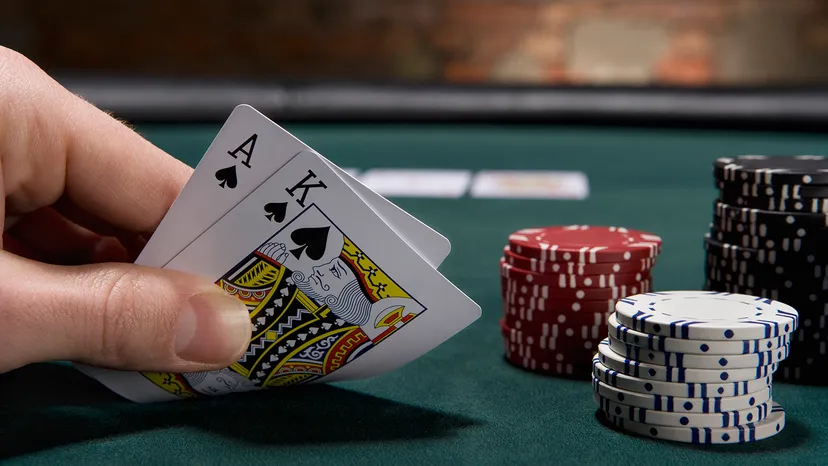
A natural blackjack — an Ace together with a ten-value card — is the strongest start you can get. It’s paid differently from a regular win and usually ends the round immediately unless the dealer has the same combination.
Then there are ties, or “pushes.” They don’t feel exciting, but they’re part of the game. Nothing is won, nothing is lost, and you move on to the next round.
Insurance is one of those features that sounds safer than it actually is. When the dealer shows an Ace, you’re offered a side bet. It might seem like protection, but in the long run, it rarely benefits the player.
To keep it simple, here are the points that matter most:
- You are always playing against the dealer, not other players
- If your hand goes over 21, the round ends immediately
- A natural blackjack gives you an advantage right away
- The dealer follows fixed rules and does not improvise
- Optional bets like insurance should be treated with caution
Once these rules feel natural, you stop second-guessing the basics and can focus on making better decisions during the round.

Blackjack Strategy Basics: How to Improve Your Odds
At some point, the game stops being just about “hit or stand.” You begin to notice that certain choices work better than others. That’s where Blackjack strategy comes into play.
The idea is not to control the cards — that’s impossible. The idea is to respond to them in a way that makes sense over time. Instead of reacting emotionally, you start relying on patterns.
For example, if the dealer shows a weak card, there’s often no need to rush. Let them make the mistake. On the other hand, when the dealer shows a strong card, you may have to take a risk just to stay in the round.
This shift in thinking is what separates casual play from a more thoughtful approach. It’s not about bold moves — it’s about consistent ones.
A well-known voice in the world of blackjack once put it very directly: “Blackjack is the only casino game where the player can gain an advantage over the house.” — Edward O. Thorp, mathematician and author of Beat the Dealer (1962)
What he meant is simple: your decisions matter. Not in a dramatic, all-or-nothing way, but in small, repeated moments. Over time, those moments add up.
You don’t need complicated systems to start improving. Even basic awareness helps — like recognizing when a hand is already strong enough, or when chasing a better total only increases your risk.
The more you play, the more these decisions start to feel natural. You’re no longer guessing — you’re responding.
Common Mistakes Beginners Should Avoid
Almost everyone starts the same way — a bit unsure, a bit impatient, and often too willing to take risks. That’s part of learning, but some mistakes tend to repeat more than others.
One of the biggest is playing based on emotion. Losing a few rounds can push you to bet more or take unnecessary chances. Winning can have the opposite effect — making you feel invincible. Both usually lead to poor outcomes.
Another common issue is misunderstanding how flexible certain hands are. Players often panic with medium totals or fail to use the advantage that an Ace provides. Instead of adapting, they fall back on guesswork.
There’s also a habit of overusing certain options. Insurance is a good example. It feels like a smart move in the moment, but over time it doesn’t pay off as often as people expect.
Inconsistent play is another trap. Switching approaches every few rounds without understanding why doesn’t help. It creates confusion rather than clarity.
Here are a few things worth avoiding:
- Trying to recover losses too quickly
- Making decisions based on impulse instead of logic
- Treating all hands the same, regardless of flexibility
- Overestimating the value of side bets
- Changing approach constantly without a clear reason
Recognizing these patterns early can save you from a lot of frustration later on.
Conclusion: Mastering Blackjack Rules and Playing Smarter
Blackjack rewards attention more than anything else. It doesn’t require perfect decisions, but it does reward consistent ones.
As you spend more time with the game, you begin to notice how familiar situations repeat themselves. The same types of hands, the same dealer cards, the same moments where you have to decide whether to push forward or hold back.
Understanding the Blackjack rules is just the starting point. What really matters is how comfortable you become with them. The less you think about the basics, the more you can focus on timing and judgment.
In the end, blackjack isn’t about chasing wins. It’s about making decisions you can stand by — round after round.
FAQ
What are the basic Blackjack rules?
You’re trying to end up closer to 21 than the dealer without going over. Everyone gets two cards, you decide what to do with your hand, and then the dealer finishes theirs by following fixed rules. After that, hands are compared and the result is clear.
How do you win in Blackjack?
You win if your hand beats the dealer’s without exceeding 21, or if the dealer goes over. There’s also a special case — if your first two cards make 21, that’s a blackjack, and it usually pays better than a normal win.
What is the best Blackjack strategy?
There isn’t a magic trick, but there is a way to play smarter. Most experienced players rely on simple patterns — how strong their hand is and what the dealer is showing. It’s less about guessing and more about making the same solid decisions over time.
When should you hit or stand?
It depends on the situation. If your total is low, you usually need another card. If it’s already strong, taking more cards can be risky. The dealer’s visible card also matters — sometimes it’s better to let them take the risk instead of you.
What does “soft 17” mean?
It’s a hand with an Ace counted as 11, like Ace and 6. The important part is flexibility — if you take another card and go over, the Ace can switch to 1, so you don’t automatically lose.
<iframe width=”560″ height=”315″ src=”https://www.youtube.com/embed/UXmbwvr3aKk?si=r6qTbUnzBpif6jLj” title=”YouTube video player” frameborder=”0″ allow=”accelerometer; autoplay; clipboard-write; encrypted-media; gyroscope; picture-in-picture; web-share” referrerpolicy=”strict-origin-when-cross-origin” allowfullscreen></iframe>
