


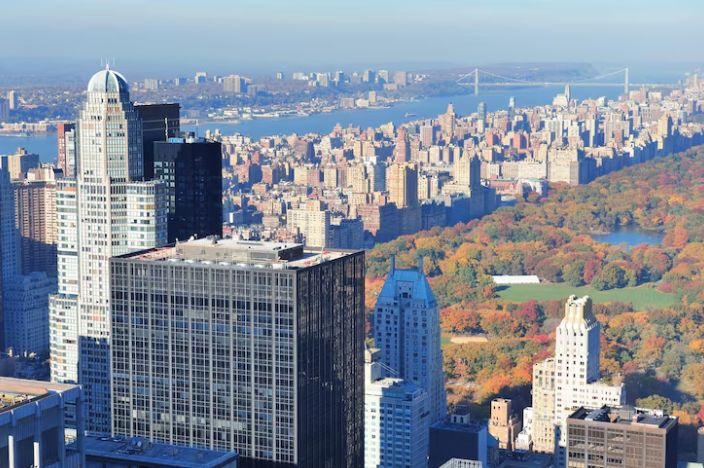
For global observers tracking commercial real estate trends, New York City remains one of the most-watched markets in the world. The combination of dense submarket structure, deep tenant base, and rapid cycle turnover produces patterns that frequently lead developments in commercial property markets across Europe, Asia, and the broader global commercial real estate landscape.
For investors, brokers, and corporate tenants in cities from Mumbai to London to Sydney, watching how New York’s submarkets behave often provides early signals on patterns that subsequently appear in their own markets.
Table of Contents
Why New York leads the global pattern
Three structural features explain why NYC commercial real estate continues to function as a leading indicator for global commercial property.
Submarket density. Manhattan alone contains around a dozen distinct office submarkets, each with its own tenant profile, pricing dynamics, and architectural stock. The variation produces market signal that single-submarket cities do not generate.
Cycle visibility. NYC’s deep tenant base and active brokerage market produce continuous transaction data that other markets often lack at the same level of granularity.
Tenant innovation. Growth-stage tech, financial services, healthcare, and creative-industry tenants have historically used New York as the proving ground for office trends that then spread internationally. The shift from open-plan to hybrid layouts, the rise of coworking, the post-2020 reset on space-per-employee, and various other patterns have all surfaced visibly in New York before propagating elsewhere.
What growth-stage tenants actually need
The global pattern that has emerged across major commercial real estate markets is that growth-stage tenants (companies in the five- to twenty-thousand-square-foot bracket) increasingly want a specific combination of features: flexible lease structures, modern building infrastructure, transit-accessible locations, and architectural character that supports modern office layouts.
Specialist commercial real estate brokerages serving this bracket, including operators in NYC like Nomad Group commercial real estate, focus on the segment where the standard institutional brokerage model often does not fit cleanly. Growth-stage tenants need a different level of service than full-floor multinationals or small-suite startups.
Why this matters for international observers
For commercial real estate professionals operating in Indian, European, or Asian markets, the patterns visible in NYC submarket dynamics frequently signal what is coming in their own markets two to five years out. Tracking how growth-stage tenants behave in markets like Flatiron, Hudson Yards, or Williamsburg in Brooklyn often produces actionable intelligence for similar bracket dynamics in Mumbai’s BKC, London’s King’s Cross, or Singapore’s CBD.
FAQ
Why does NYC commercial real estate lead global trends? Submarket density, cycle visibility, and tenant innovation produce earlier and more visible signals than most other markets.
What size tenants are most active in NYC commercial real estate? Growth-stage tenants in the 5,000 to 20,000 square foot bracket are particularly active across multiple Manhattan submarkets.
What is the typical lease length? Five to seven years for the bulk of the volume, with variation by submarket and tenant size.
How does NYC compare with London or other global commercial markets? NYC tends to produce earlier signals on tenant behaviour shifts. London, Singapore, and other major markets often follow with a two-to-five-year lag.
